Container Technology Wiki
Docker Containers
- Docker 101
- Basic Docker Operations
- Docker Administration
- Docker Security Resources
- Docker OS Interaction
- Docker With Other Tools
- Docker API
- Docker Compose
Kubernetes Guide
- Kubernetes 101
-
Kubernetes Architecture
- Kubernetes Ecosystem
- Kubernetes Nodes
- Kubernetes Pods
- Kubernetes Controllers and Control Plane
- Kubernetes DaemonSets
- Container Runtime Interface
- Working with Containers in Kubernetes
- Working with Images in Kubernetes
- Workloads in Kubernetes
- Kubernetes Services
- Kubernetes Jobs
- Kubernetes and Microservices
- Kubernetes Operators
- Kubernetes Persistent Volumes
- Kubernetes Advantages and Use Cases
-
Kubernetes Operations
- Installing Kubernetes
- Kubernetes Configuration
- Kubernetes Monitoring
- Kubernetes Debugging and Troubleshooting
- Kubernetes Load Balancing
- Kubernetes Security
- Kubernetes Networking
- Kubernetes Storage Management
- Kubernetes in Production
- Working with Kubernetes Ingress
- Kubernetes Security Best Practices
- Managing Kubernetes with Kops and Kubeadm
- Kubernetes Secrets
- Kubernetes Autoscaling
- Kubernetes ConfigMap
- Kubernetes Namespace
- Kubernetes Authentication
- Kubernetes Vault
- CIS Kubernetes Benchmark
- Kubernetes Cluster
- Kubernetes as a Service
- Managed Kubernetes
- Kubernetes Distributions
- Enterprise Kubernetes
Container Basics
- Container Architecture
- Advantages of Containers
- Container Challenges
- Containers and IT Infrastructure
- Enterprise DevOps
- eBPF
- eBPF Linux
Containers Ops
- Container Security Management
- Container Deployment
- Container Monitoring
- Container Automation
- Container Multitenancy
- Container Backup and Disaster Recovery
- Prometheus Monitoring
Container Security
- Container Security Best Practices
- Containers for DevSecOps
- Container Vulnerabilities and Threats
- Container Vulnerability Scanning
- Container Secrets Management
- Container Access Control
- Container Audits and Compliance
- Application Whitelisting
- Zero Trust Networks
- Network Segmentation for Containers
- Container Isolation
- Open Source Security Tools for Containers
- Open Source Vulnerability Scanner
- Open Source Security Tools
- Container Security Tools
Cloud Native Computing Foundation
- AWS EC2 Security
- Cloud-Native Applications
- Cloud-Native Architecture
- Cloud Native AWS
- Cloud Native Development
- Cloud Native Infrastructure
- Cloud Native Security
- Envoy Proxy
- Harbor Kubernetes
- Open Policy Agent
- Oracle Cloud Security
- SaaS Cloud Security
- Security Issues in Cloud Computing
- SPIFFE
- VMware Tanzu
Serverless Computing
- Serverless Architecture
- AWS Lambda
- Azure Functions
- Google Cloud Functions
- Serverless Security
- On-Premises Serverless Platforms
- Function as a Service - FaaS
- Knative
- Serverless vs Containers
Container Platforms
- Containers and Cloud Computing
- Container Operating Systems
- Red Hat Openshift
- Pivotal Container Service
- Multi-Cloud Strategy
- Kubernetes vs Cloud Foundry
- CWPP
Other Container Engines
Kubernetes Alternatives
Container Community and Events
- Container Technology Wiki
- Container Basics
- Container Architecture
- CContainers vs Virtual Machines
Containers vs Virtual Machines
A virtual machine (VM) is an operating system or application environment installed on software, which imitates dedicated hardware. This page gathers resources about the VM vs. containers comparison, including a comparison of strengths and weaknesses, application portability, security and isolation, and more.
Below we have compiled publicly available sources from around the world that present views on Containers vs Virtual Machines.
The Container Security book by Liz Rice
Fundamental Technology Concepts that Protect Containerized Applications
Perspectives on Containers vs Virtual Machines

The Race for Security: Can VMs and Containers Really Compete?
The advantages of a container outnumber those of a virtual machine, including the fact that containers are more lightweight and use fewer resources than virtual machines. A crucial milestone in the rapid adoption of containers in production environments is the issue of security.

Containers vs Vms - Which One is Better?
If you just want to have a number of separate instances to run applications, a container environment often provides greater efficiency but If you want to have best isolation of environments and come from a server virtualization perspective, then system virtualization may be more relevant.

Containers vs Virtual Machines
atlassian.com

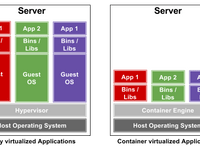
Virtualization versus Containers
koutoupis.com


linuxandubuntu.com

VMs vs. Containers: Which is Better for Security?
searchcloudsecurity.techtarget.com


Specific Technologies


Migration of Java Legacy Application From VMs to Containers
blog.jelastic.com

Will Containers Replace Hypervisors? Almost Certainly!
cloudscaling.com

Tools

Kata Containers - The Speed of Containers, The Security of VMs
katacontainers.io
Further Reading
What is a Container — Containers are a method of virtualization that packages an application’s code, configurations, and dependencies into building blocks for consistency, efficiency, productivity, and version control. This page gathers resources about containers, including technical definitions and comparisons.
What is a Container Image — A container image is a self-contained piece of software that has everything in it needed to run – code, tools, and resources. This page gathers resources about container images, including tutorials and container-related conferences.
What is a Container Image Repository — A container image repository is a collection of related container images, usually providing different versions of the same application or service. This page gathers resources about image repositories, including tutorials and specific environments in which image repositories are used.
Container Image Registries — A container image registry is a service that stores container images, and is hosted either by a third-party or as a public/private registry such as Docker Hub, Quay, and so on. This page gathers resources about container image registries, including tutorials and specific technologies or tools related to container image registries.
Containers and Agile Development— Agile software development and delivery via containerization are tightly related. This page includes resources about the benefits of using containers in the agile development cycle.
Containers vs Virtual Machines — A virtual machine (VM) is an operating system or application environment installed on software, which imitates dedicated hardware. This page gathers resources about the VM vs. containers comparison, including a comparison of strengths and weaknesses, application portability, security and isolation, and more.
Containers vs Traditional Application Model — The traditional application model is a model in which applications are executed directly on virtual machines or on bare-metal servers. This page gathers resources about the difference between containerized infrastructure and the traditional application model.
Containers and Microservices— Microservices or microservices architecture describes a particular way of designing software applications as suites of independently deployable services. This page gathers resources about using containers to build a microservices architecture and the benefits of combining microservices with containers.
Service Mesh— A service mesh is a configurable infrastructure layer for a microservices application. It makes communication between service instances flexible, reliable, and fast. This page gathers resources on service mesh architecture, examples an the Istio project.
Refactoring a Monolith to Microservices— Today’s requirements on modern web applications demand high availability and scalability for which a microservice architecture has shown to be a promising solution. However, building a microservice architecture from scratch is sometimes not possible when monolithic web applications are already in place and cannot be replaced. Instead, it is required to break up this monolith step-by-step into microservices.
Get updates on container technology

